reference from england 1
We just recently acquired the bath from Bartok for a new country house and consequently we have not yet used it, but I have had one in London since about 1995. Mine also came from Japan, from a maker called Kodai (as in, “past era”) who sadly seem themselves to have been consigned to the past, as they appear no longer to be in business.
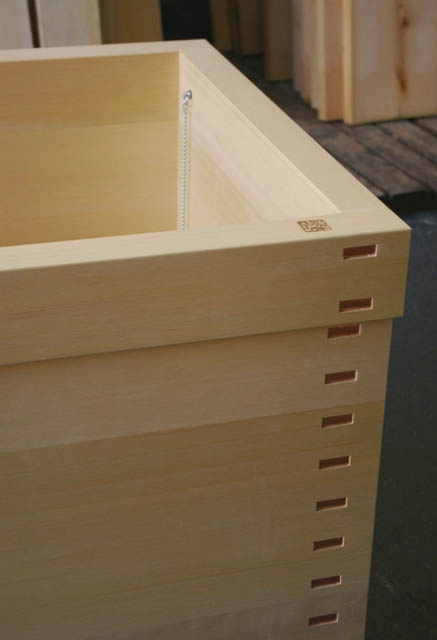
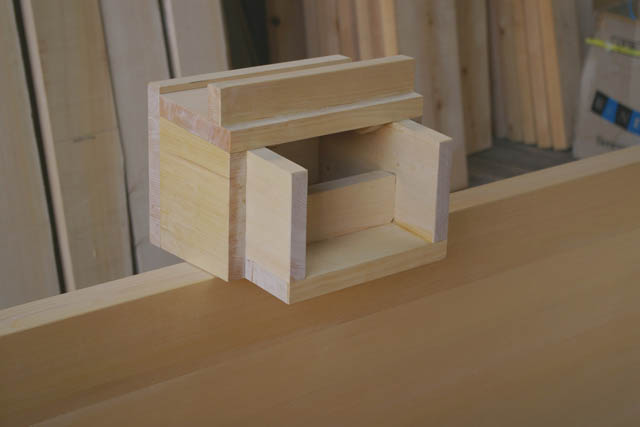
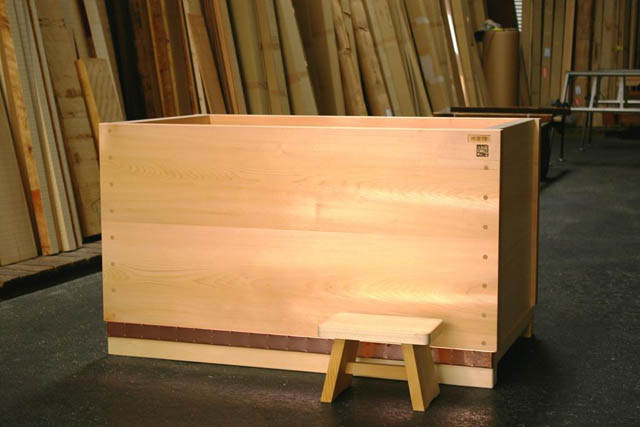
We found Iacopo and Bartok on the web. He was much less expensive than local tub manufacturers and offered a genuine hinoki product constructed the traditional way, so we did no further comparison shopping. Having seen the tub, I can strongly recommend him. Also, he was very helpful and communicative, which is important because your builder likely will be unfamiliar with the idea and will need information and reassurance. He also sorted out the shipping, so this presents no big obstacle compared to local
alternatives.
My experience with the tub in London might not be representative, because I am there less than half the time and the tub is used only occasionally. As you might know, this is in some ways more wearing for the tub than continuous use, because it is usually quite dry. I think the average life expectancy is about 10 years, but after several years past that, mine still is in good shape.
I think the most important thing is to put the tub in a “wet room” because it will “weep” and the water should be collected and drained. This will enable a proper bathing experience anyway, because you can have showers and taps in the room but outside the tub, as in Japan.
I also strongly recommend incorporating a recirculation system so that you can keep the water hot.
So, you can see that the builder has to be familiar with the concept of a wet room (this is becoming fairly standard technology) and has to know a bit about spa recirculation systems.
For cleaning, Kodai supplied a solvent containing tree oil, which i quite liked, but with their demise I have not been able to find a similar product.
Absent this, when i empty the tub, I wipe it with a towel (no cleaning products) and sand it occasionally. This seems to work well.
My tub is in a reconstructed pre-Victorian house, and i just leave the sash window to the room slightly open. No special ventilation measures.
I hope this helps. I strongly recommend you get the tub and hope you enjoy it.
Regards,
D J

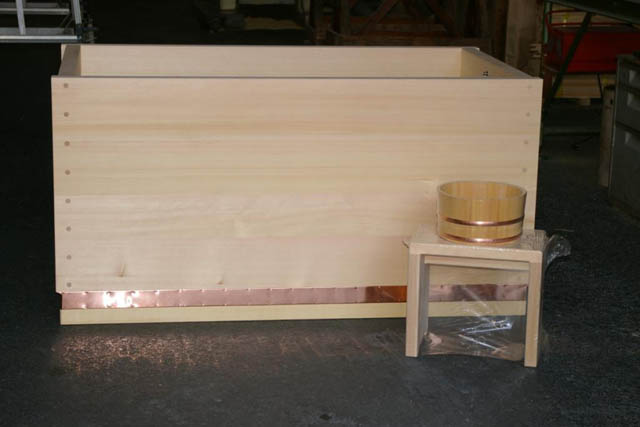
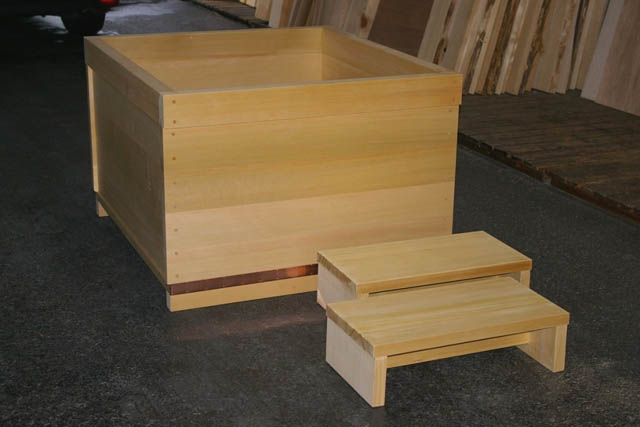
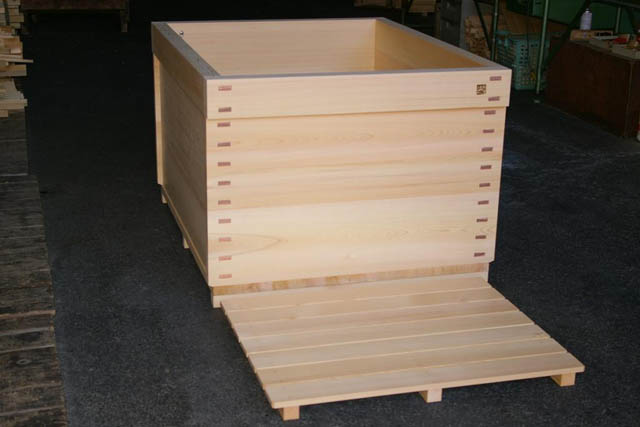
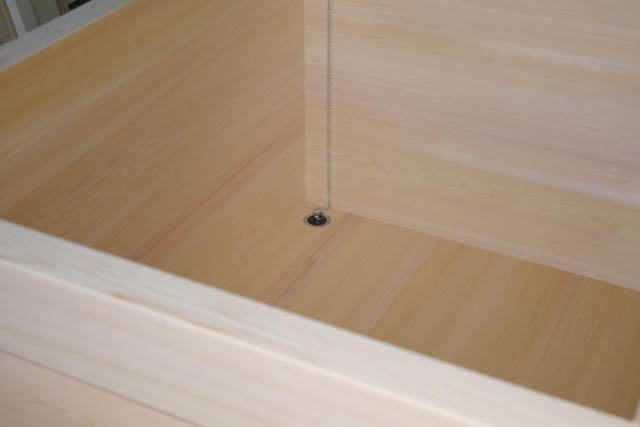
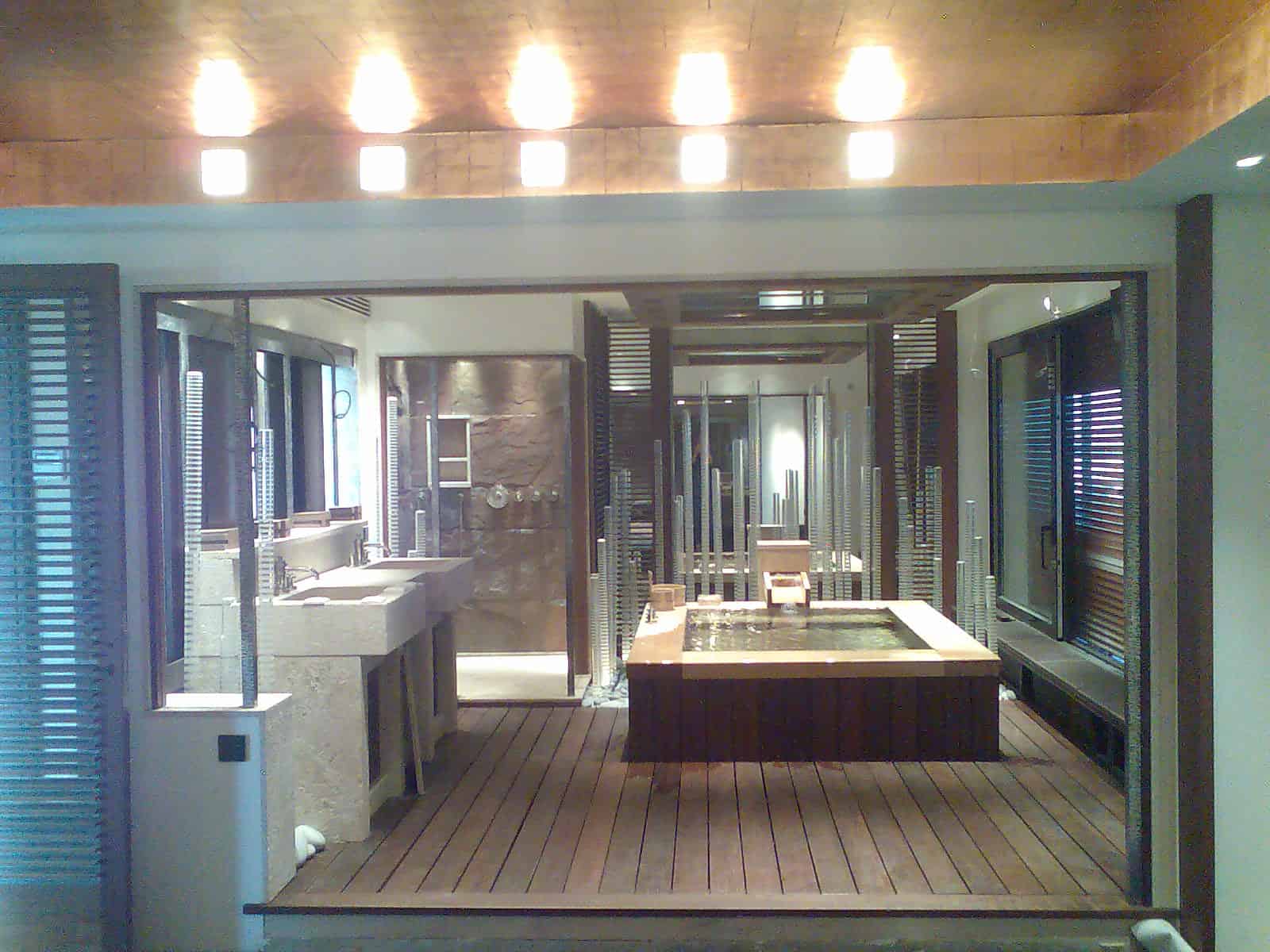
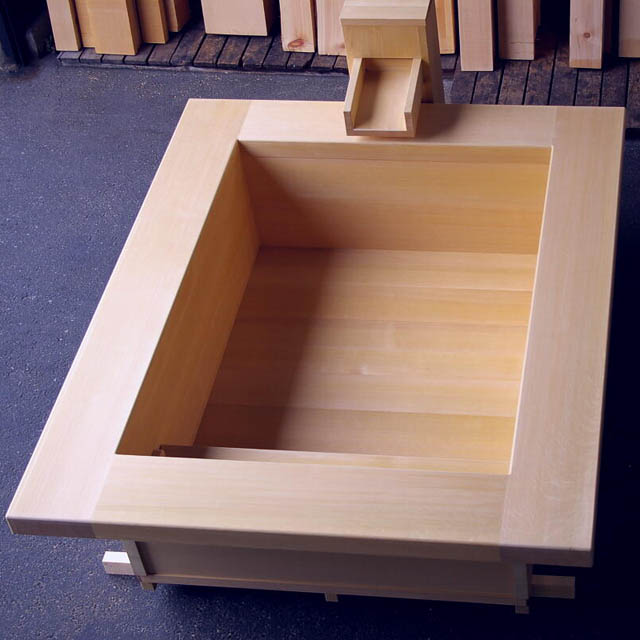
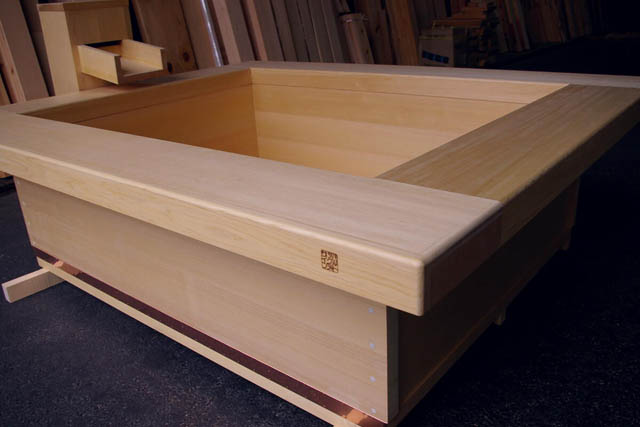
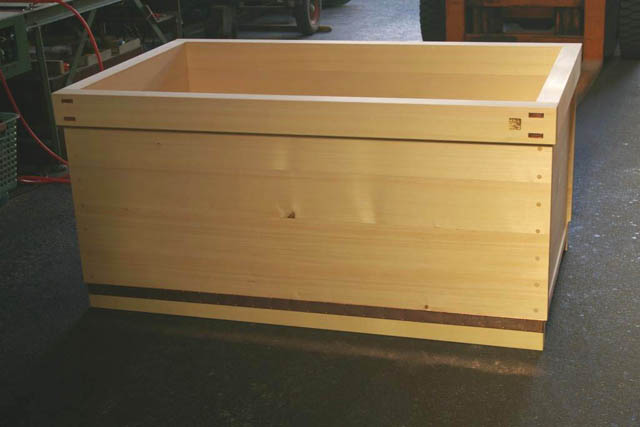
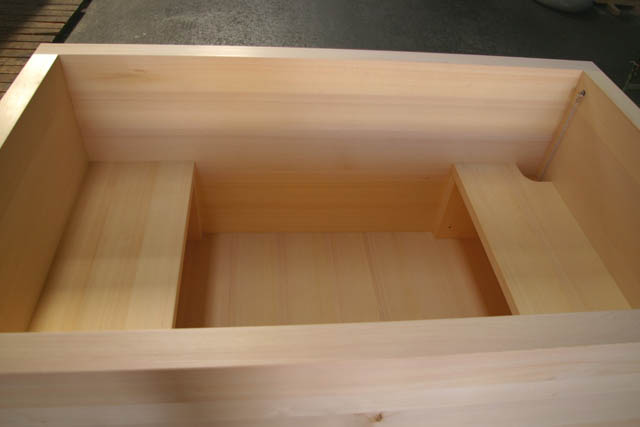
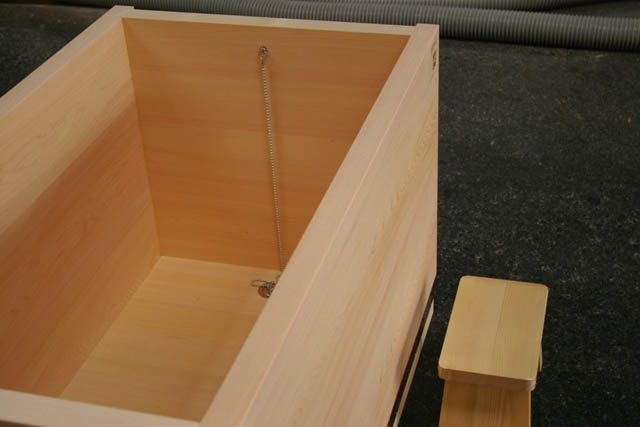
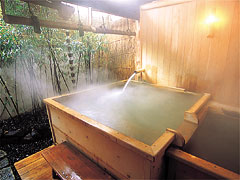 Wood & water: a natural heaven. Japanese wood baths are used for soaking, not for washing. While we relax our body in the bath, natural oils with medical properties and soothing fragrances are released in the warm water for a sensation of extreme wellbeing.
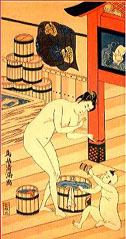 Why are the japanese so proud of their baths and hot springs? The Japanese ritual of the bath has several reasons besides the obvious purpose of hygene. A warm bath stimulates blood circulation and decongestionates the linfatic system: this is effective both in washing off the sweath of the torrid summer and in preventing cold and influenza during the rigid japanese winter. Medical evidence has been found that a correct warm bath has positive effects on the health of body and mind, also thanks to the curative and emollient effect of minerals and oils present in the water. Recent research proves how negatively charged ions present in the water and steam of a bath “scrub off” magnetic tensions and free radicals, having an “antiage” effect on the whole body. Negative ions also have experimented psychological benefits, imparting a feeling of security and sense of refreshment while they soothe the body. Such ions tend to be generated by waterfalls, fountains, and other sources of agitated water. When bathing japanese style, we first soap and scrub, then we rinse and only when we are “physically clean”, we enter in the bathtub for soaking (at least 30 minutes). Because the body is washed outside the bath, the bath water stays clean and deeply refreshing.
 Why are the japanese so proud of their baths and hot springs? A HINOKI bathtub is ideal for a provides a full sensory experience: beautiful white cedar with a rich grain, smooth texture, soothing lemony fragrance, and the warm comfort of soaking away all the tension and stress of the day.