How to Choose a Hinoki Bath: The Complete Guide to Selecting and Purchasing Your Japanese Wooden Ofuro
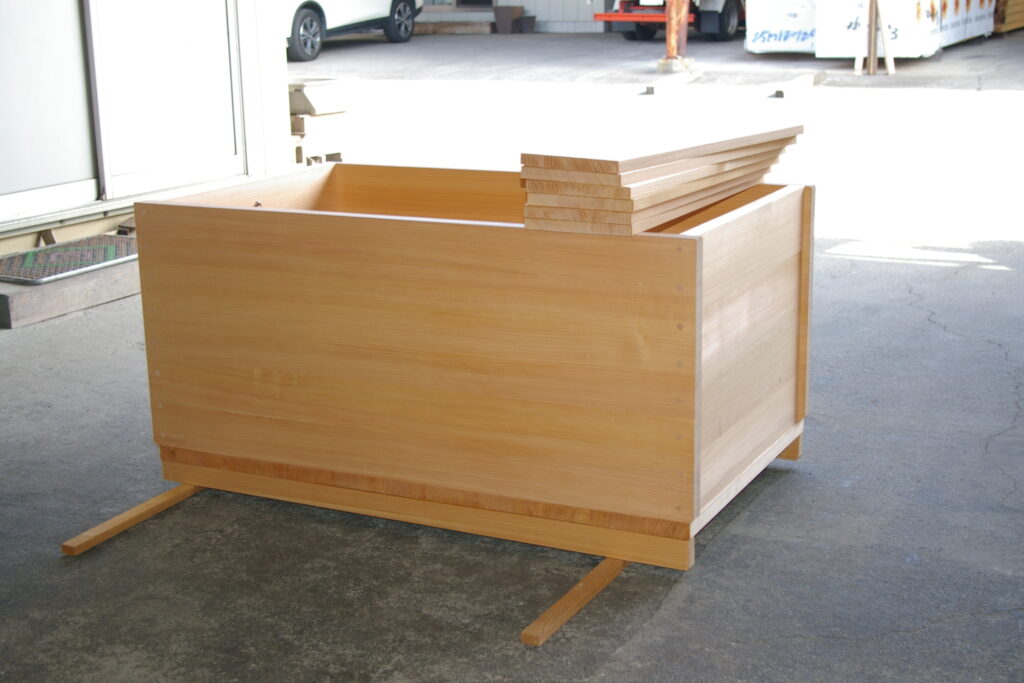
By broad request, we compiled a comprehensive “orientation” article to guide you towards the choices and options you have when ordering your ofuro bathtub.
Bringing a hinoki (Japanese cypress) bath into your home transforms your bathroom into a haven filled with tradition, craftsmanship, and the natural fragrance of fine timber.
After a busy week, pouring a deep, hot soak and closing your eyes while admiring the elegant woodgrain can transport you to a tranquil Japanese inn or luxurious spa. This is the unique allure of the Japanese soaking tub – ofuro.
While highly prized by boutique hotels, spas, and luxury properties globally, hinoki ofuro have become increasingly accessible for private homes and a diverse range of commercial settings. Thanks to the skill of Japanese artisans, you can order fully handmade, custom-made wooden bathtubs tailored to your preferences. With proper care and selection, a quality hinoki tub will grace your life with beautiful aroma and luster for decades, in fact often 20 years or more. However, not all hinoki tubs are created equal. Origin, material, craftsmanship, installation environment, and aftercare options all make a significant difference in durability, appearance, and satisfaction.
This extensive guide will give you a transparent, practical overview of the true appeal of hinoki baths, the differences among styles and materials, a comprehensive purchasing checklist, cost and budgeting guidance, practical maintenance techniques, common mistakes to avoid, and recommendations for making a choice you’ll love for years. Installation of any wooden tub should be carried out by licensed professionals; the information here is provided for general knowledge only and does not constitute technical or medical advice. If bath culture and the elegance of Japanese cedar speak to you, read on to craft your perfect space for relaxation.
The Appeal and Benefits of a Hinoki Bath
Few bathing experiences match the feeling of stepping into a hinoki bathtub. The appeal of hinoki woody fragrance and smooth texture runs far deeper than aesthetics or a fascination with Japanese tradition.
- Physical and Mental Relaxation
The gentle, natural touch of hinoki as it soaks in hot water is distinctly different from metal or artificial materials. The soft warmth combines with natural thermal properties, creating a bathing environment that feels both inviting and deeply soothing. In Japan, people have long associated hinoki baths with generalized relaxation, and many report melted tension and lighter spirits after a soak. These effects are rooted in centuries of tradition, not positioned as medical treatment. - Natural Scent and Aromatherapy Effects
Hinoki baths flood the air with a subtle, calming scent when filled with hot water. This aroma is thanks to phytoncides – organic compounds with proven stress-reducing and air-purifying properties in traditional use. The sensation is like forest bathing in your own home: fresh, meditative, purifying. For more about these qualities, see the heritage and benefits of hinoki wood. - Durability and Water Resistance
Japanese cypress from premier forests such as the Kiso Valley boasts high levels of antimicrobial and water-resistant oils. Historically, these woods were chosen for building sacred temples and shrines, which have endured for centuries. A professionally crafted, solid-wood hinoki tub can withstand daily use in both family and hospitality settings over many years with only modest changes in color and texture – a testament to the material’s enduring strength.
Anecdote: One customer, after years living abroad, described stepping into their new hinoki bath: “For the first time, I felt truly home again – the fragrance brought me back to Japan.” This connection with nature and memory is unique to authentic wood.
Types and Styles of Hinoki Bath Tubs
Within the world of hinoki baths, you’ll find a variety of structures, installation approaches, and wood choices. Selecting the best style starts with understanding your space, routine, and expectations.
Construction Type Comparison: Integrated (One-Piece) vs. Assembled (Modular)
Integrated (One-Piece) tubs are fully built and finished by artisans using thick, solid planks, often joined using the traditional sasikomi (staggered mortise and tenon) technique or wooden dowels. This approach excels at water-tightness, provides impressive visual presence, and results in a very solid tub. Integrated tubs are timeless and often chosen for luxury homes, spas, and hotels. Installation requires a clear access path due to their size.
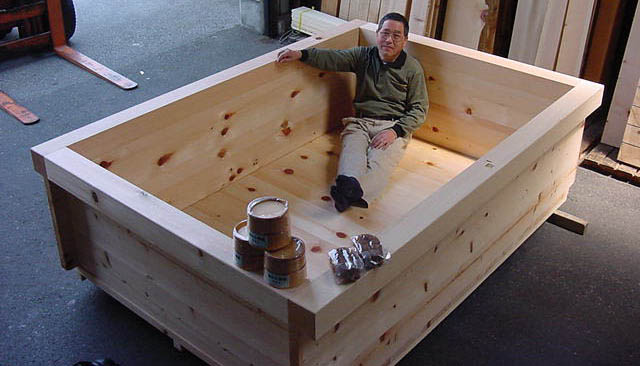
Consider that the largest tubs we can fit in a container is about 2.5m x 2m, which makes it large enough
for 6-8 people. Here is an example (click the photo for details)
Assembled (Modular) tubs ship in several panels and are put together on-site.
While being theoretically possible, it is very impractical and just does not happen in the 99.9% of cases. Consider that our craftsmen would have to travel to your location and ship their tools in advance to avoid airport security regulations. This is costly and, schedule-wise, difficult to implement. Additionally, the wood panels may slightly swell or contract during transportation, thus requiring adjustments on site that may reduce the degree of precision in the joint fitting and thus compromise the long-term longevity of the ofuro.
This system may be considered as an option for very large communal tubs for 10 people or more, used in hotels, onsen (hot springs) etc.
Comparison Table
| Type | Durability | Ease of Repair | Price Range | Installation Ease | Best Fit |
|---|---|---|---|---|---|
| Integrated | Highest (20+ yrs) | Moderate | Moderate | Easy | Apartments, Luxury homes, Hotel rooms, Yachts |
| Assembled | High (10+ yrs) | Easy | High | Moderate | Hotel spa area, Hot springs |
Indoor vs. Outdoor Hinoki Baths
- Indoor Bathtub
Perfect for replacing or upgrading the main residential bath. Freestanding, drop-in, or alcove versions are available. Ensure your bathroom has appropriate waterproofing and floor drainage; this allows straightforward placement of the tub with minimal construction. - Open-Air (Outdoor) Bath
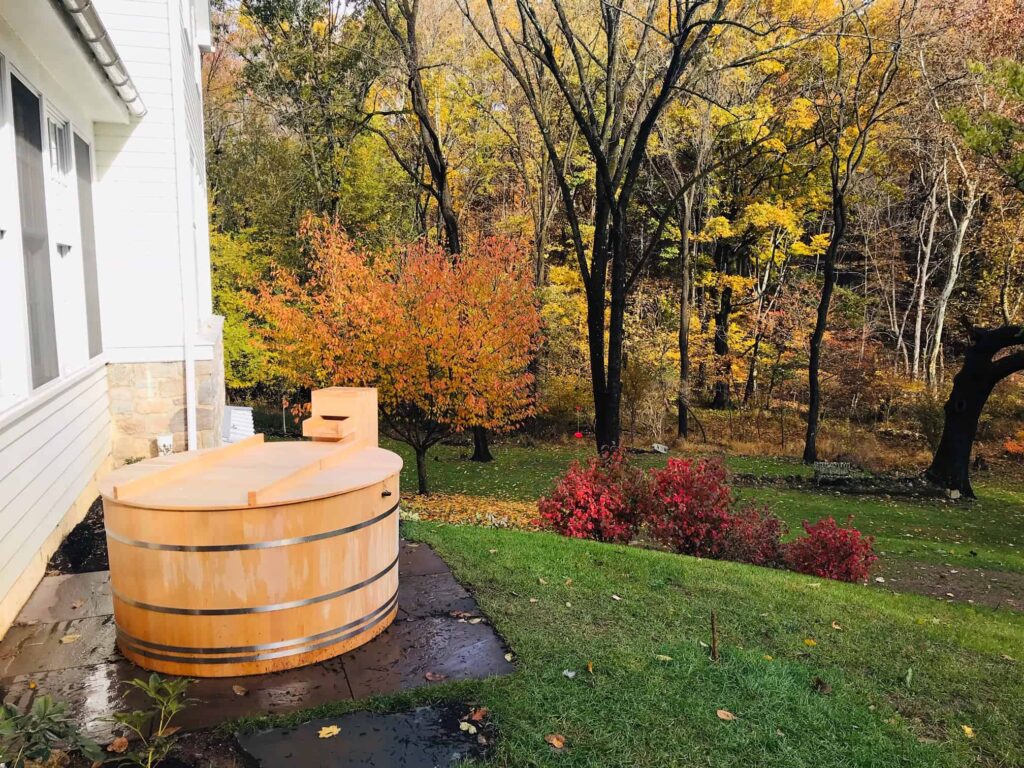
Suitable for courtyards, patios, balconies, or spa gardens. Enjoy the sensation of outdoor bathing in privacy. Outdoor use demands careful planning: strong, well-drained foundations, reliable waterproofing, protection from direct sun, and shelter from sustained rain. - The Flexible option
Wooden bathtubs are very lightweight, and the unthinkable can become a reality. If your ofuro is installed in a wet room (simply sitting on the waterproofed floor) and you have a deck outside, you can also consider lifting the tub and moving it indoors or outdoors according to the season and your mood. For this option, it is best if you have a spout in the outdoor locations, but you can also use a hose to fill it up.
Material Variations: Hinoki Grades and Alternative Japanese Woods
While hinoki reigns supreme among Japanese bath materials, alternative woods each have distinct traits. The table below summarizes some popular choices:
| Wood | Strengths | Limitations | Best Suited For |
|---|---|---|---|
| Hinoki | Sublime aroma, anti-microbial, fine appearance | Patinas with age | First-time buyers, scent lovers |
| Sawara Cypress | Affordable cost, lightweight, most suitable for round rubs | size limitations in case of box-type tubs | Cost-sensitive owners, compact spaces |
| Hiba (Asnaro) | Extra-strong antimicrobial; robust scent | Pungent forest aroma, not for everyone | Mold-resistance, traditionalists |
| Koyamaki | Top durability, smooth grain | Highest price, almost impossible to source… | Longest lifespan, enthusiasts |
If you’re passionate about timber, pay attention to the woodworking approach – take time to research proper grain orientation, source provenance, and artisan finishing. Deeper details are available on the craftsmanship behind wooden ofuro manufacturing page.
Key Points to Check When Purchasing a Hinoki Bath Tub
Whether for personal relaxation or commercial hospitality, carefully scrutinize each point below to ensure your wood bath is a true, lasting investment.
Comprehensive Hinoki Bath Purchasing Checklist
- Source and Material Quality
Prioritize Japanese grown, old-growth hinoki from renowned areas such as the Kiso Valley or Aomori. Superior tubs are made from heartwood with dense grain and minimal knots. Lower-priced imports often lack longevity in water-resistance and fragrance. - Wood Grade
Seek single-plank (solid) wood with primarily straight, even grain (quarter-sawn) and no sapwood or knotholes. Tubs with a high percentage of heartwood not only look more beautiful but also retain their scent for far longer.
For thickness: choose at least 30mm to ensure long-term stability – note that trends for thinner (20–28mm) slabs are growing, but this is at the expense of the longevity of the tub. - Manufacturing Process and Finish
Ensure proper kiln-drying by seasoned craftsmen, reducing risk of warping and discoloration. Ask about antimicrobial finishes (such as hinokitiol-based coatings) or modern water-resistant treatments. Investigate the joinery: sasikomi, wooden dowels, and finely-fitted seams extend lifespan. - Installation Compatibility
Check dimensions against your space. Confirm doorways, staircases, and hallways allow delivery. For houses, guarantee that flooring is reinforced and drainage is properly structured; for apartments, review building regulations and limitations.
Waterproofing, drain setup, and plumbing are crucial – get guidance from installation methods and waterproofing advice if you are unsure. - After-Sales Support
Seek vendors offering at least a one-year manufacturing warranty, guidance for minor repairs, and advice on daily care. Natural wood brings occasional surprises, including slight cracks or resin exudation; knowing your supplier stands behind their craft will set your mind at ease.
Note: Always partner with qualified professionals for installation, plumbing, and compliance with all local building codes.
Typical Cost Range and Budgeting for Your Hinoki Tub
Hinoki baths have long been associated with luxury, but thoughtful choices and new technologies support a spectrum of price ranges.
- Main Cost Factors
- Wood grade and sourcing (heartwood content, origin, presence of knots)
- Tub dimensions and shape (most common: 100–180cm)
- Integrated models typically cost 10–30% more than modular equivalents
- Customization: covers, hinoki stools, buckets, or specialty drain fittings increase the price
- Emerging Trends for 2026
- New antibacterial-coated models are available, offering lower maintenance at an initial premium (+10–15%)
- Environmentally conscious (thinner, lighter) tubs cost less but may sacrifice longevity; thicker walls generally mean better returns over decades
- Guide Price Ranges
- Integrated (one-piece): ¥1,200,000–¥2,500,000 for premium models and large format
- High-end custom/large projects: ¥2,000,000 and beyond, seen in top-tier spas or boutique hotels
- Outdoor installations: add ¥200,000–¥500,000 for groundwork and weatherproofing
See your tub as a generational investment – prioritize wood quality, craftsmanship, and proper installation. Remember hidden costs (delivery, foundation work, regular maintenance) to build a realistic budget.
Maintenance Tips to Keep Your Hinoki Bath in Excellent Condition
A hinoki tub can remain fragrant and beautiful for decades, but only with proper, routine care. This is particularly important in dry climates or for those living outside Japan.
- Daily Cleaning and Drying
After each soak, drain the tub, gently wipe the interior with a soft sponge or towel, and dry all surfaces. Regular bathroom ventilation prevents mold, especially in humid periods. - Humidity Control for Crack Prevention
Maintain balanced moisture: let the tub “rest” dry periodically, but avoid over-drying. The wood should remain slightly moist – prolonged exposure to dry air can cause cracks and warping. - Reviving Aroma with Natural Oils
Over time, fragrance may fade. Dab a diluted hinoki essential oil lightly on the inner surfaces to restore the signature forest aroma. - Managing Resin Exudation and Minor Repairs
Sticky resin beads may appear after years – this is harmless and can be wiped away with a soft rag. For small cracks, use wood filler or consult for a patch repair. Don’t attack blemishes with abrasives – gentle solutions are best.
If unsure or facing a stubborn issue, reach out via email, WhatsApp, or schedule a Zoom call for demonstration and support. Personalized care guides help ensure your tub keeps delivering relaxation for years to come.
Common Pitfalls and Important Considerations
Many problems with hinoki baths can be prevented by caution and clear communication.
- Imported or Low-Grade Hinoki Risks
Tubs built with significant softwood, high sapwood content, or wood from unverified sources tend to crack faster and lose fragrance early. For lasting value, insist on genuine Japanese hinoki heartwood. - Installation and Waterproofing Mistakes
Inadequate slope, missing floor drains, DIY installation, or skipped waterproofing are common reasons for leaks or mold. Entrust installation to professionals – see installation methods and waterproofing advice for best practices. - Changing Appearance – Accepting Patina
Expect natural darkening and mellowing of color. This is part of the charm – like fine furniture, a well-loved hinoki tub gains beauty with age. - Do Not Use in Saunas
High temperatures (above 90°C) release high concentrations of aroma compounds, which can irritate the eyes and cause discomfort. Hinoki baths are for use with hot water, not sauna conditions. - Size Selection Errors
Going “as big as possible” often backfires – oversized tubs may not fit through entrances, could overwhelm the space, or outstrip heating capacity. Consider depth, shape, and seating for a tailored soaking experience – even small tubs, if deep, can be just as rewarding.
Installation codes and building requirements may vary by country and region. Always follow the advice of licensed experts, and treat all above as informational guidance – not a substitute for specialized consultation.
Summary and Recommended Approach to Choosing Your Hinoki Bath
- Go for Authentic Japanese Hinoki and Skilled Artisan Craftsmanship
The combination of origin, wood quality, and traditional joinery – especially from forests like the Kiso Valley – results in unmatched durability and pleasure. - Balance Size, Type, and Budget with Your Installation Needs
Houses, apartments, commercial spas, and outdoor retreats all have unique requirements. Think carefully about present and future usage and evaluate both upfront and 20-year cost of ownership. - Rely on Expert Support for Maintenance and Questions
Do not hesitate to reach out for support regarding cracks, resin, aroma maintenance, or installation. Consultation is available via email, WhatsApp, and Zoom for any uncertainties or troubleshooting. - Strongly Consider Custom-Made Tubs for a Perfect Fit
A truly custom hinoki bath ensures best use of your available space and maximizes comfort and delight. See our ordering process for custom-made hinoki tubs for details. - Learn from Experience: Customer Stories
Feedback from owners and completed projects can clarify your own preferences and eliminate doubts. See first-hand perspectives at customer testimonials and project stories.
Cherishing Japanese bath tradition means valuing centuries-old craft and a connection with living wood. With thoughtful selection and care, a hinoki bathtub will become a rejuvenating retreat – for your family or guests – for countless years.
We hope this reading could help you brainstorm with your peers. Do you want to include iacopo in the conversation? Drop me a line by email at japan<at>bartokdesign<dot>com. We can have a phone call or a zoom meeting at your convenience.
I am looking forward to it!
Leave a Comment